The Korean Cookbook by Junghyun Park and Jungyoon Choi – Our Review
· By Cookbook Map
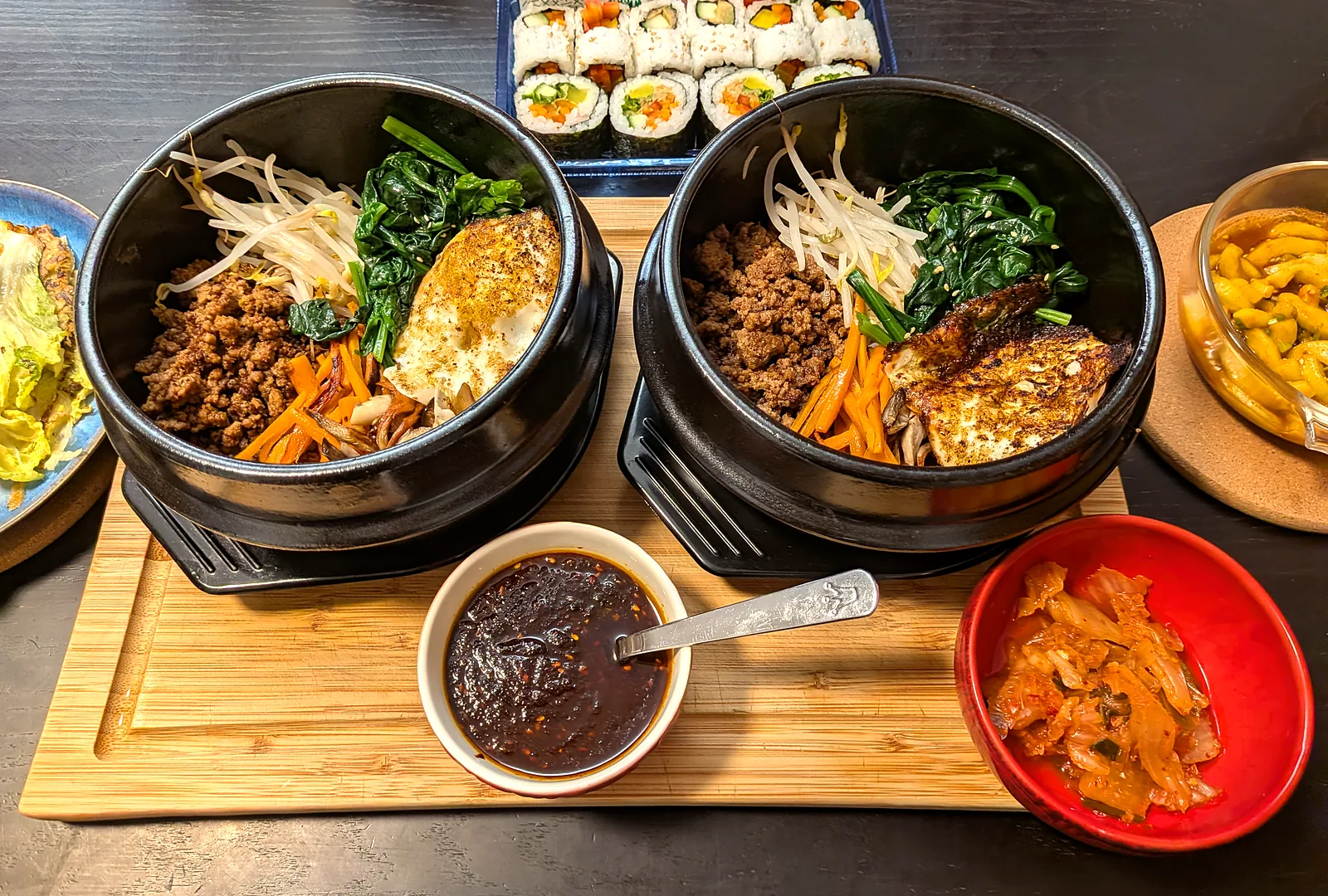
For our second review we cooked dinner from The Korean Cookbook: bibimbap, napa cabbage jeon and overripe cucumber namul.
The book at a glance
- Authors: Junghyun Park and Jungyoon Choi. According to the biographies in the book, Park is an acclaimed chef born and raised in Seoul, and Choi is a chef, culinary researcher and writer with 25 years of experience working in Spain, Australia and Korea.
- Publisher: Phaidon, 2023
- Size: 495 pages
- Dimensions: about 27.7 cm × 18.8 cm × 4.1 cm (10 7/8 in × 7 3/8 in × 1 5/8 in)
- Weight: 1.7 kg (3.7 lb)
- What we cooked: Bibimbap (page 97), Napa Cabbage Jeon (page 232) and Overripe Cucumber Namul (page 173)
- Our rating: 5/5
A beautiful book to own
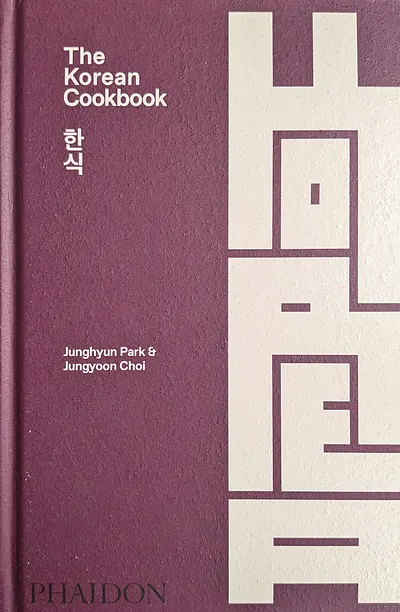
Like most Phaidon books, it's a beautiful book to display, with good quality paper and excellent photography throughout. The cover is wrapped in traditional hanji paper, which gives it a nice texture and feel.
What's inside
The book opens with prefaces from both authors, followed by an introduction and a history of Korean cuisine. There are sections on hansik (Korean food and culinary culture), Korea's regional foods, bapsang and bansang (the traditional meal setting and small side dishes) and the Korean pantry, plus a glossary of terms used throughout the book.
The recipes are then broken up into major sections on fermentation, bap (cooked rice), banchan (dishes to accompany rice) and husik (desserts), along with a number of smaller sections on foods such as jeon and buchimgae (savoury pancakes), guksu (noodles), juk (porridge), tteok (rice cakes) and more. There's also a section of recipes contributed by chefs and experts, and an index to help you find your way around.
Finding the ingredients
The recipes are straightforward to follow, and the ingredients should be obtainable if you have access to an Asian grocery store. If you don't, a lot of the dishes may be hard to pull off.
Cooking from it
We made three dishes for dinner and served them with store-bought kimchi and some vegetarian sushi rolls from the grocery store.
Bibimbap (page 97)
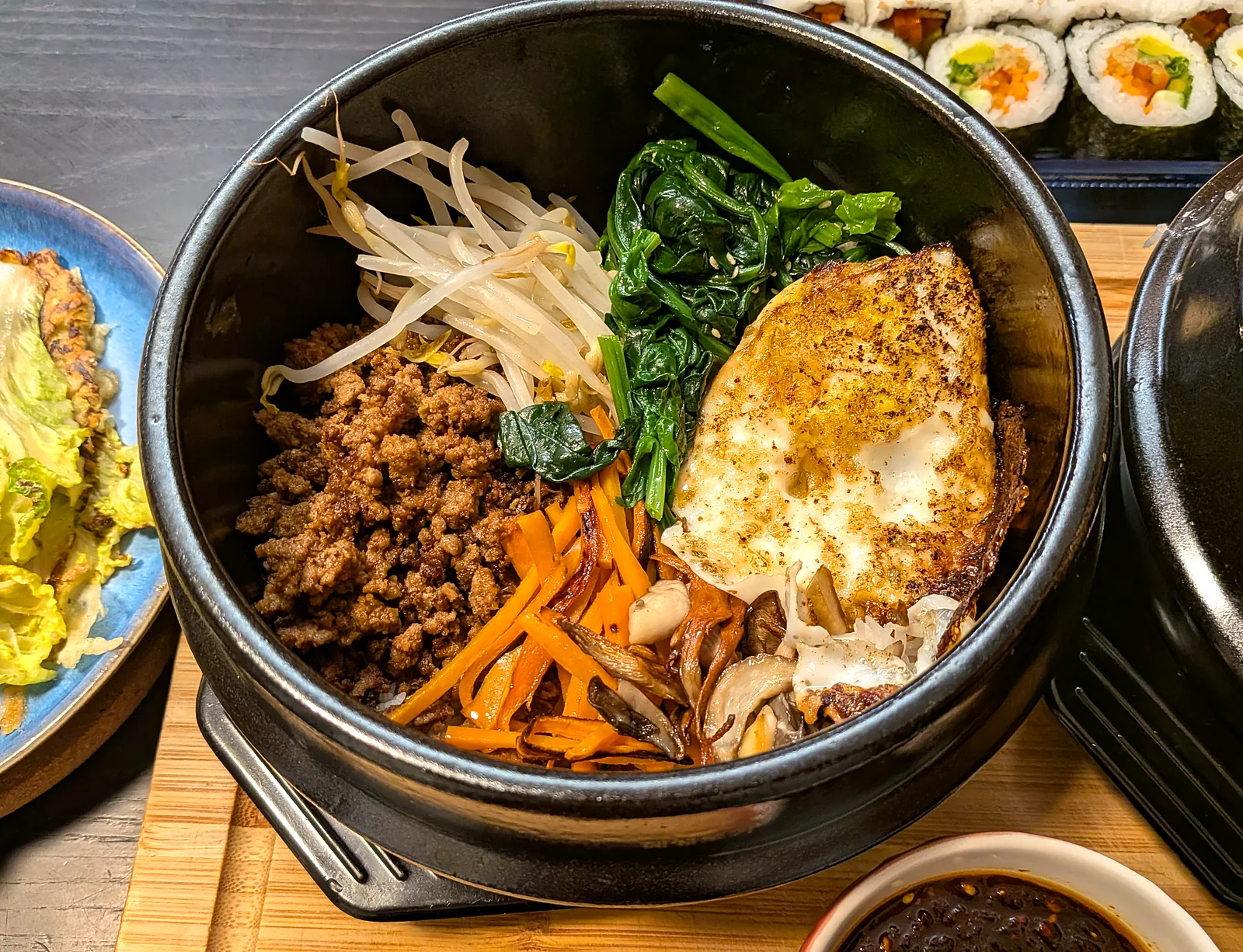
A classic mixed rice dish. We followed the recipe loosely. We made the rice in a rice cooker, then added it to heated stone pots to try to get crispy rice on the bottom. We also made way too much beef, as it was a frozen amount that had to be used up once thawed. On top went fried oyster mushrooms, fried carrots, blanched spinach, blanched bean sprouts and sesame seeds, with a fried egg as an extra topping and a sauce made from gochujang.
It turned out great. We don't think we've ever had a bad bibimbap.
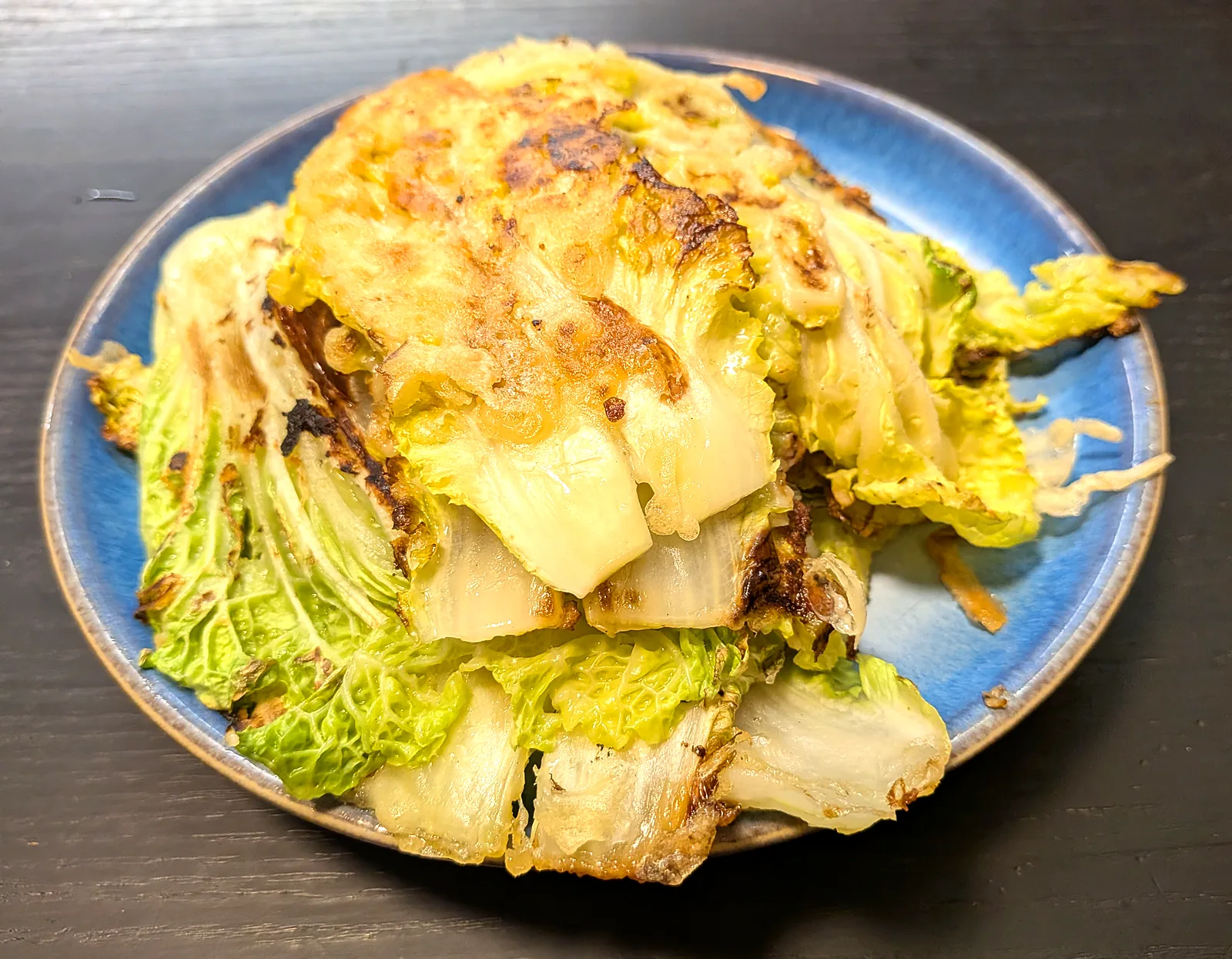
Napa Cabbage Jeon (page 232)
Napa cabbage leaves dipped in pancake batter and fried. It's simple but delicious, and we really enjoyed the mix of sweet and savoury flavours. We didn't have perilla oil, so we substituted sesame oil. We also used baby napa cabbages and regular soy sauce.
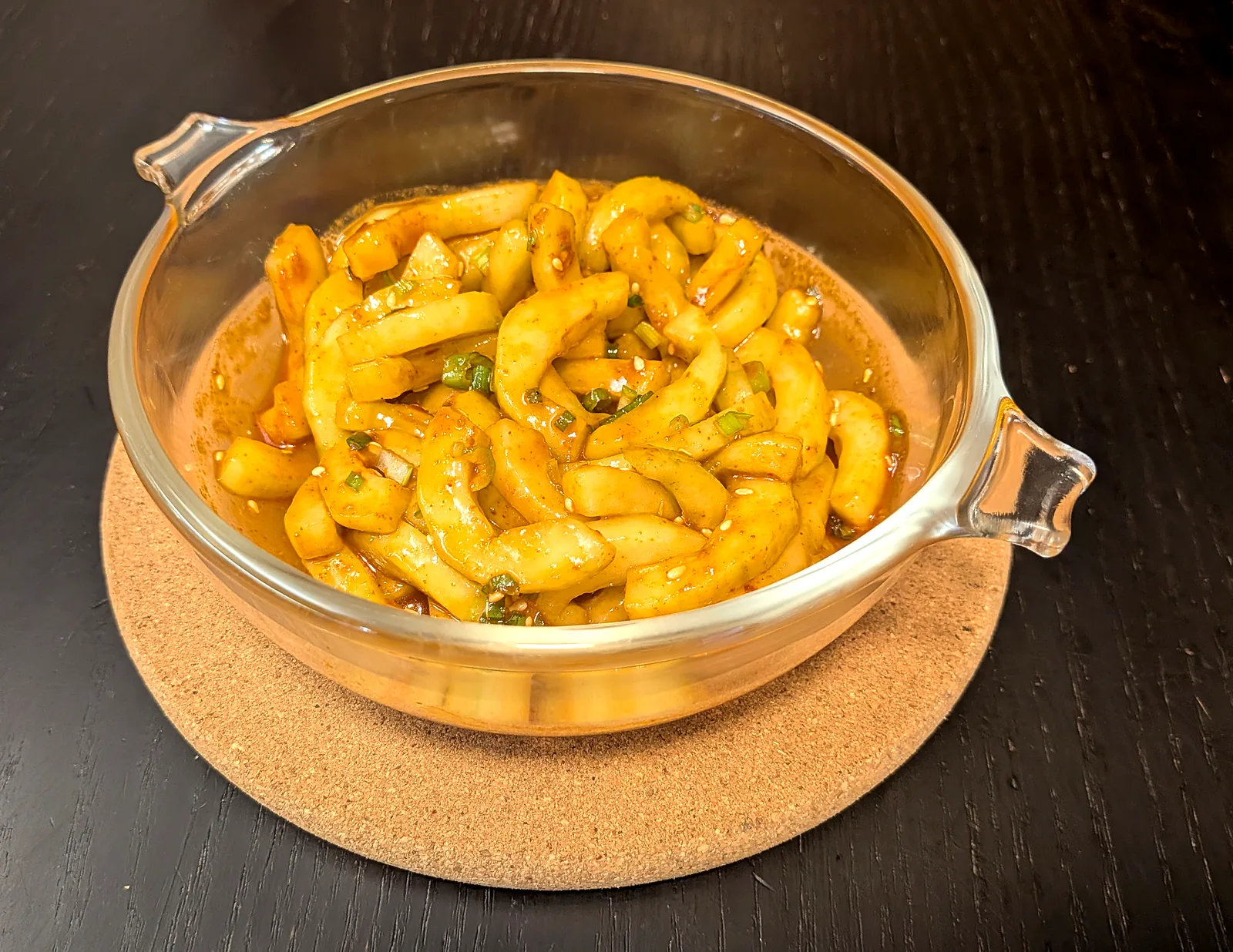
Overripe Cucumber Namul (page 173)
A banchan dish. We had a cucumber on the counter that was yellowing, so this dish worked out perfectly. We normally don't like cucumbers that have started to yellow, but this dish helped us enjoy them.
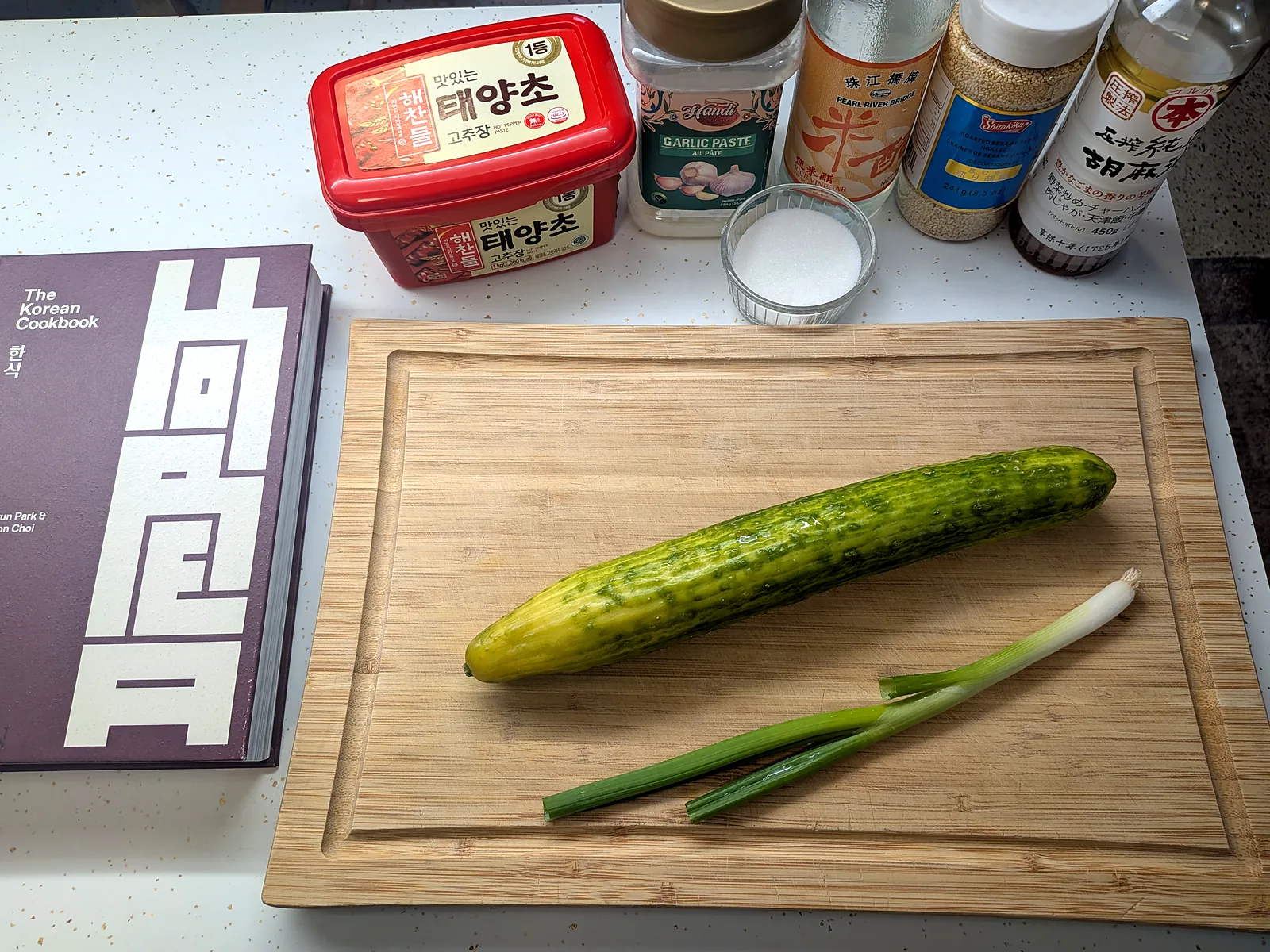
The cucumber is peeled and seeded, then salted to draw out moisture. The salt is rinsed away and the excess moisture removed before the cucumber is covered in a sauce made from gochujang, rice vinegar, sugar, garlic, scallions, sesame oil and sesame seeds.
Our verdict
We rate The Korean Cookbook 5/5. It's an excellent addition to a collection and covers a wide variety of Korean foods.
 Top pick
The Korean Cookbook
Phaidon · 2023
✓ On our shelf
Phaidon's guide to Korean home cooking, from Atomix chef Junghyun Park and food writer Jungyoon Choi.
Buy on AmazonLooking for more? See all our picks on our South Korea page.